Are you planning a trip to the Dolomites? This is the ultimate Dolomites travel guide for you!
I recently spent a full week in the Dolomites, and I am writing you the guide I wish that I had for myself.
The Dolomites are an incredible Alpine Mountain region in northern Italy, known as South Tyrol.
Tourists flock to this UNESCO World Heritage Site annually to experience otherworldly views like Seceda, Tre Cime di Lavaredo, Lago di Braies, and Alpe di Siusi.
Planning a trip to the Dolomites can feel overwhelming because there are so many amazing things to see and do.
But I’ve got your back! Maximizing your time and prioritizing the things you want to do most are key.
This Dolomites travel guide covers everything you need to know before you go, including the best time to visit, where to stay, how to get around, and the top things to do throughout the region.
By the end, you’ll have all the information you need to start planning an unforgettable trip to the Italian Alps! Shall we?
Why Visit the Dolomites?
The Dolomites are a true mountain-lover’s paradise.
No matter your level of physical fitness, everyone can find something (probably, many things!) they deeply love in the Dolomites.
Vibrant blue alpine lakes or towering mountains accessible from both the road, cable car, or challenging hikes make the Dolomites an accessible mountain experience for every type of traveler.
Where Are the Dolomites?
The Dolomites are located in the South Tyrol region of Northern Italy, which borders Austria.
Best Time to Visit the Dolomites
The best time to visit the Dolomites largely depends on what type of activities you are looking for.
Skiers and snowboarders will want to enjoy world-class (and Olympic-certified!) slopes in the winter.
Backpackers will love to visit the spring or fall seasons, which provide the most optimal weather for highly sought-after trails such as Alta Vita 1 or Tre Cime.
How to Get to the Dolomites
Getting to the Dolomites is easier than many people expect.
You can visit by car, train, or a combination of public transportation and regional buses.
I recommend flying into an international airport hub in Northern Italy, like Milan, Venice, or Verona.
It’s more common for US travelers to have more flight options available from Milan because there are direct flights from Milan to major cities in the US.
Alternatively, you can fly into a further airport like Rome if you get a cheaper flight, but it will be a lengthy car or train journey to arrive in Bolzano, the entry town to the Dolomites.
Car
Driving is the easiest way to reach the Dolomites and the option I’d recommend for most travelers.
If you’re flying into Italy, you can rent a car from airports such as Bolzano, Venice, Verona, Innsbruck, or Milan and drive directly to your accommodation.
Having your own vehicle gives you the most flexibility, especially if you want to visit multiple parts of the Dolomites during your trip.
The roads are generally well-maintained, though mountain driving can be slower than expected due to winding roads and seasonal traffic.
Train and Bus
You can also reach parts of the Dolomites by train and bus. Trains connect major Italian cities to towns on the edge of the region, like Bolzano.
If you’re staying on one side of the Dolomites (choosing just east or west) and plan to hike, use cable cars, and explore nearby villages, public transportation can work surprisingly well.
However, travelers hoping to see both the eastern and western Dolomites in a short amount of time will usually find a rental car more convenient.
During the summer months, additional shuttle services often operate to popular destinations and trailheads.
This makes it easier to reach popular places that have limited (or expensive) parking.
How to Get Around the Dolomites
There are two main ways to get around the Dolomites: by car or by public transportation.
Car
The easiest way to get around the Dolomites is by car.
It’s especially useful if you’re planning a road trip, visiting multiple valleys, chasing sunrise and sunset views, or staying in smaller villages.
Having your own vehicle gives you the freedom to explore at your own pace and stop whenever you see a view worth pulling over for, which happens a lot! Love these happy little accidents🙂
However, it’s incredibly important to keep in mind that parking is EXPENSIVE during peak season in the summer.
It’s required to purchase advanced parking spaces online to visit the most popular Dolomites locations like Tre Cime.
As of 2026, it costs €30 per vehicle. Booking for parking spaces opens about once a month in advance.
Public Transit
If you don’t want to drive, buses connect many of the major towns and attractions.
Cable cars are also a huge part of getting around, especially if you plan to visit places like Seceda or Alpe di Siusi in the Eastern Dolomites.
If you’re staying in one area and sticking to a few popular attractions, public transportation can work and may be a more cost-friendly option.
You’ll just need to be a bit flexible with your schedule!
Car and Public Transit Combo
It’s possible to rent a car from the airport and drive to the Dolomites, and rely on public transit while leaving your car parked at your accommodation.
I met a couple while traveling who were staying at a campground that provided them with free bus passes in Ortisei.
This saved them big money on parking, which could cost up to €50 per day at the official Seceda and Alpe de Siusi cable car garages.
For my next visit, a combination of cars and public transit will be my preference!
Where to Stay in the Dolomites
The best place to stay in the Dolomites depends on which attractions you want to prioritize.
For most visitors, it helps to think of the region as two main areas: the Western Dolomites and the Eastern Dolomites.
If you’re visiting for the first time and want easy access to famous viewpoints like Seceda and Alpe di Siusi, the Western Dolomites are often the better choice.
If your itinerary focuses on Tre Cime di Lavaredo, Lago di Braies, and dramatic mountain scenery, consider staying in the Eastern Dolomites.
If you have time, you can combine both!
This is what I did during my trip, but it’s all a matter of preference. If I had spent more time planning in advance (and reading guides like this!), I probably would have steered us more towards the East.
I find the mountains more rugged in the East, and less “cable car-necessary” attractions like Seceda and Alpe di Sisusi (for budget purposes).
⭐Popular Dolomites Tours
Where to Stay in the Western Dolomites
The Western Dolomites are home to some of the region’s most iconic landscapes and are an excellent base for first-time visitors.
You do not need to stay in any one of these towns specifically- if you find more affordable accommodation in the surrounding area and you have a rental car, this should work just as well.
Just be mindful that you are not located hours away from any of the places you are visiting. Choose something central!
Ortisei
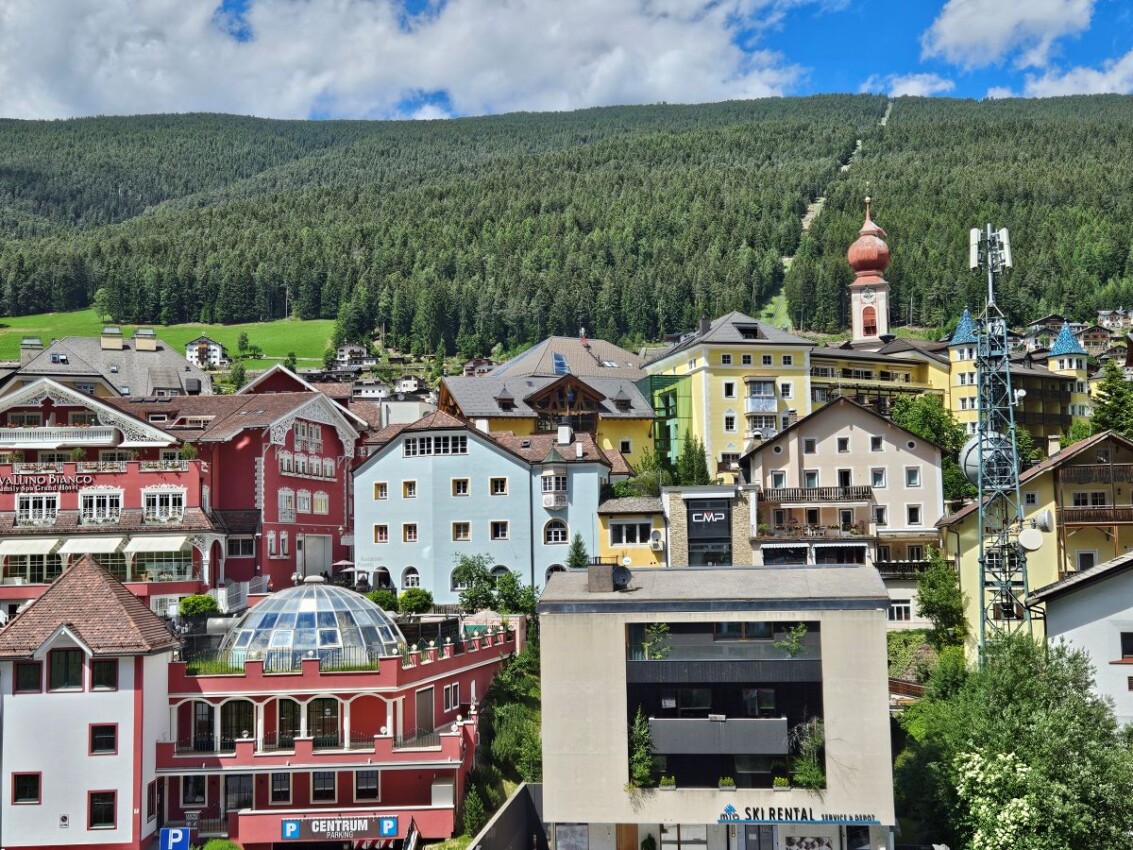
Ortisei is one of the most popular places to stay in the Dolomites.
It provides easy access to Seceda, Alpe di Siusi, and numerous hiking trails.
It’s known as one of the best places to stay in the region, which makes it incredibly popular and over-touristed. Prices and crowds reflect how popular it is.
My preference is staying in a village or town within a 15-minute drive from Ortisei. It feels more local and authentic, but you’re still near the main Dolomites things to do.
I stayed at Telfernhof and LOVED my experience.
Selva di Val Gardena
Located deeper in Val Gardena, Selva is ideal for travelers focused on hiking, skiing, and mountain scenery.
It provides quick access to the Sella Ronda route and several spectacular mountain passes.
Canazei
Canazei is a fantastic base for a Dolomites road trip.
Its central location near Passo Pordoi, Passo Sella, and Passo Gardena makes it easy to explore multiple valleys and scenic drives throughout the region.
Alta Badia
Travelers looking for a quieter experience may prefer Alta Badia.
Known for its picturesque villages, excellent food, and stunning alpine scenery, it offers a more relaxed atmosphere while still providing access to many of the Dolomites’ top attractions.
⭐Popular West Dolomites Hotels⭐
Where to Stay in the Eastern Dolomites
The Eastern Dolomites are known for dramatic mountain peaks, famous alpine lakes, and some of the region’s most popular hiking destinations.
Likewise, with the Western side, these towns are just some ideas. You pass several mountain towns as you drive to your destinations, and any of these towns will be fine.
Just make sure you are not staying hours away from any of your activities (like I did) because that would be annoying!
Below are some ideas, but not rigidly necessary:
Cortina d’Ampezzo
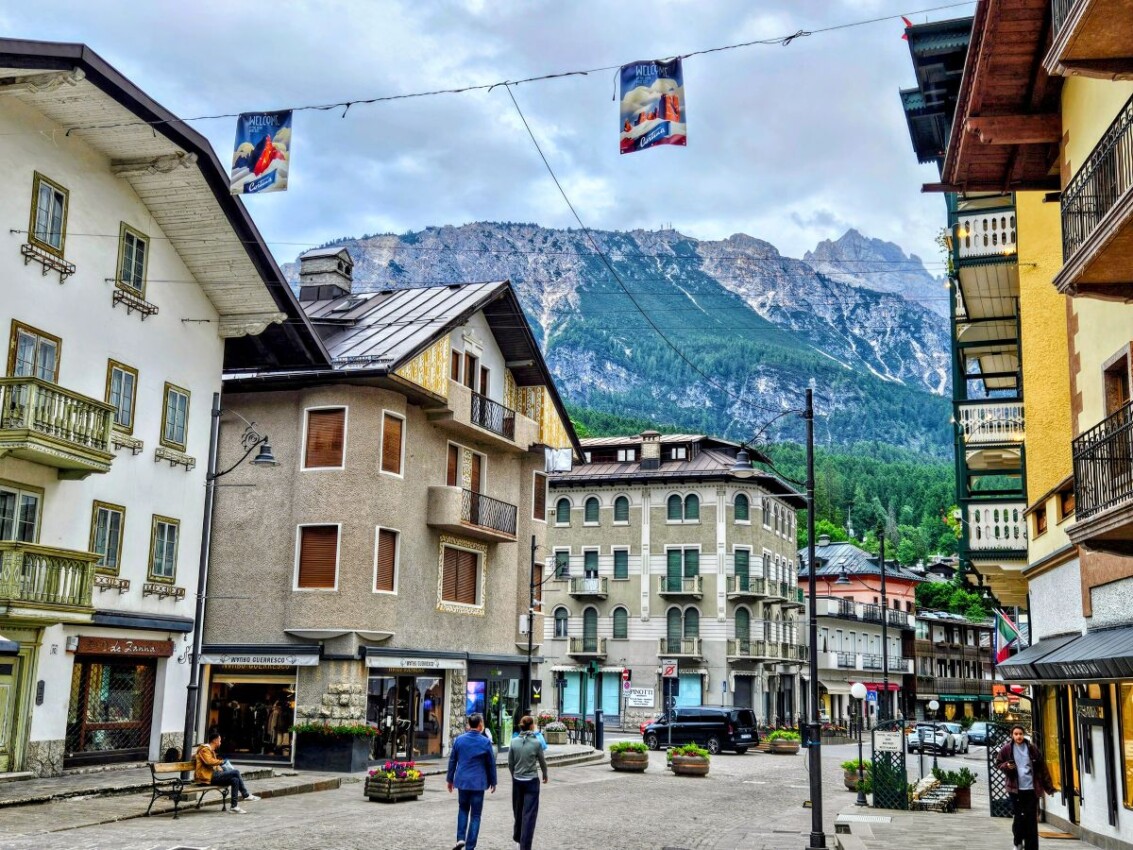
Cortina d’Ampezzo is the most famous town in the Eastern Dolomites and serves as an excellent base for exploring Tre Cime di Lavaredo, Cinque Torri, Lago di Sorapis, and Passo Giau.
Visitors will find a wide range of accommodations, restaurants, and outdoor activities.
Similar to Oristei in the West, Cortina is known for higher prices because it’s so popular.
⭐Consider: Hotel Villa Gaia
Dobbiaco (Toblach)
Dobbiaco is a quieter alternative to Cortina and offers convenient access to Lago di Braies, Tre Cime di Lavaredo, and several family-friendly hiking areas.
It is often a good choice for travelers seeking lower prices and fewer crowds.
⭐Consider: Hotel Patris
San Candido
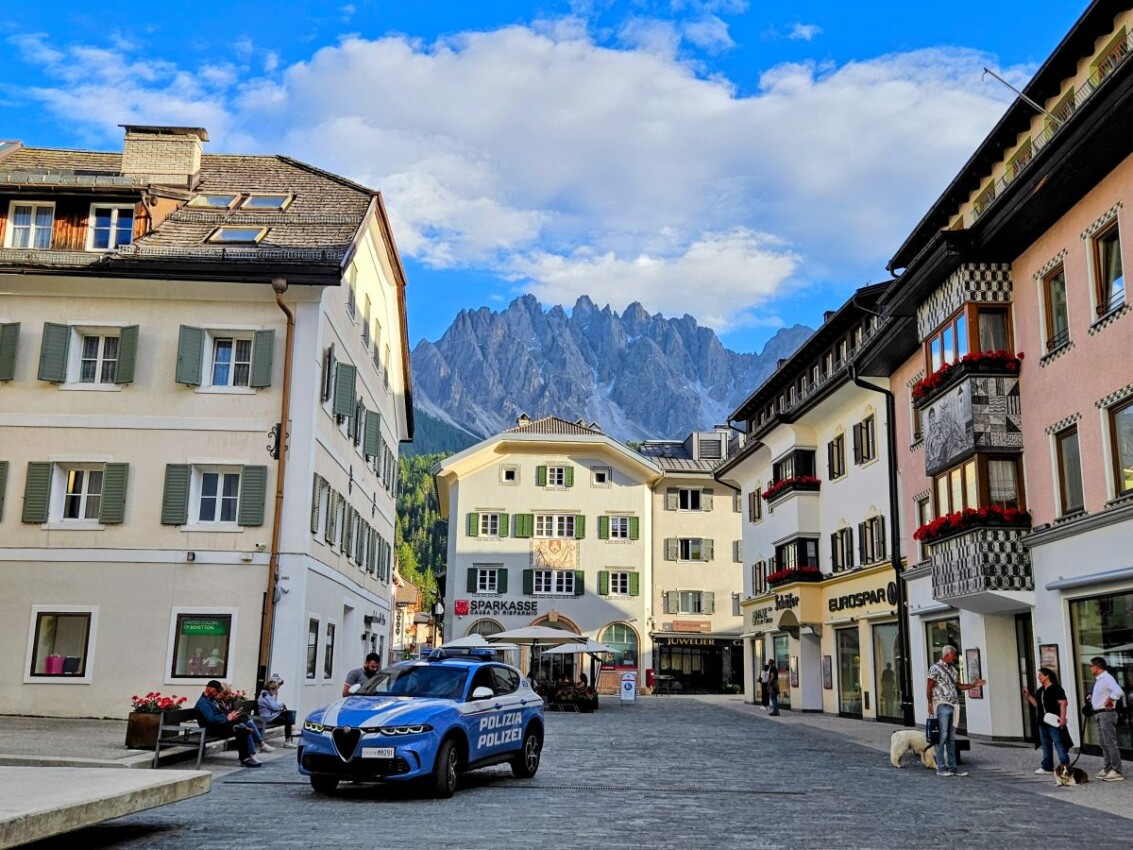
Located near the Austrian border, San Candido combines beautiful mountain scenery with a charming village atmosphere.
It is an excellent base for exploring the northeastern Dolomites and nearby attractions.
Even if you don’t stay here, I recommend visiting San Candido for dinner and taking a quick stroll around town!
⭐Consider: Naturhotel Leitlhof
⭐Popular East Dolomites Hotels⭐
Should You Stay in More Than One Place?
If you have three days or less in the Dolomites, choosing one base is usually sufficient.
For trips longer than three days, consider splitting your stay between the Western and Eastern Dolomites to reduce driving times and experience more of the region.
Once again, it truly boils down to preference. There is no right or wrong here! I could gladly spend weeks in the Eastern Dolomites and feel like I still had more to experience.
Best Area for First-Time Visitors
For most first-time visitors, the Western Dolomites (Ortisei, Selva di Val Gardena, or Canazei) provide the best combination of scenery, accessibility, and proximity to major attractions.
Travelers whose primary goal is visiting Tre Cime di Lavaredo and Lago di Braies may prefer to stay in Cortina d’Ampezzo or Dobbiaco instead.
What to Do in the Dolomites- East
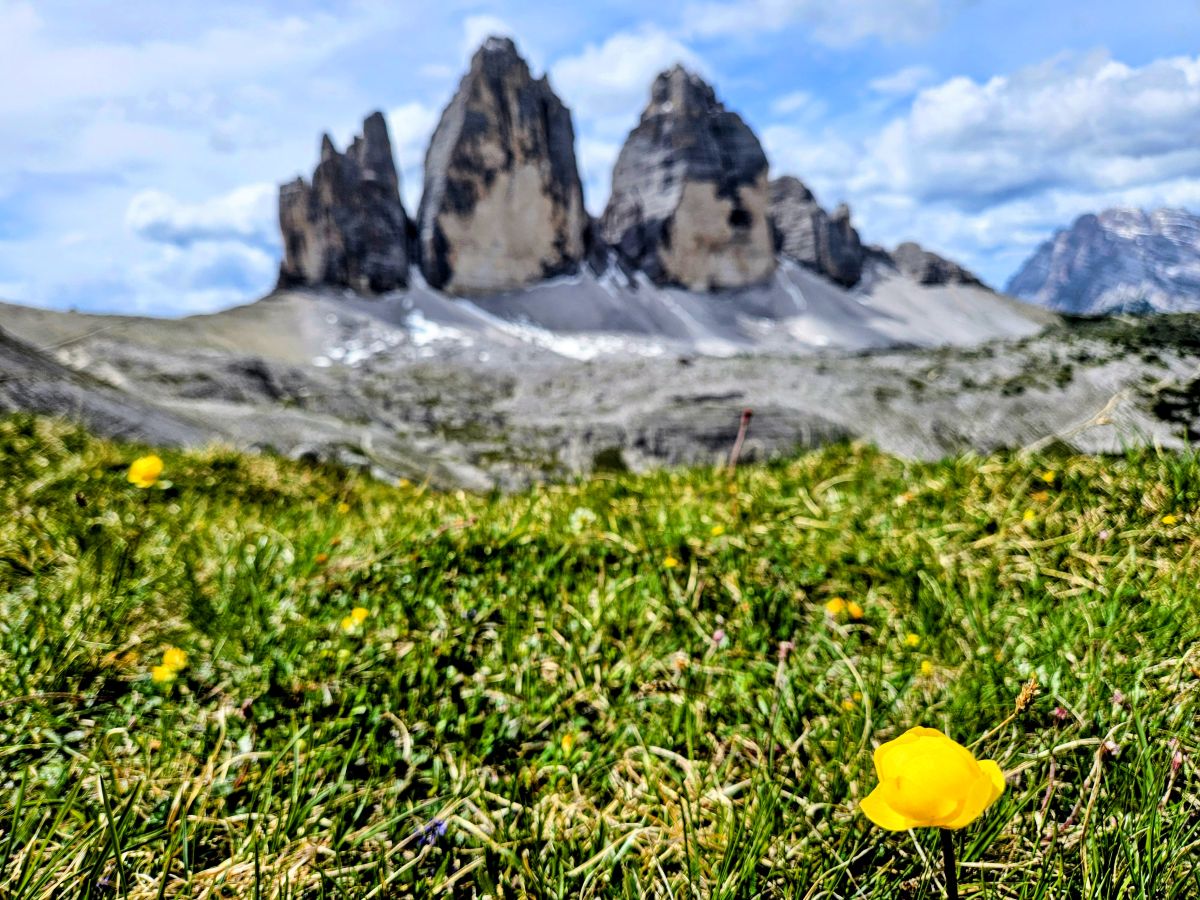
Tre Cime
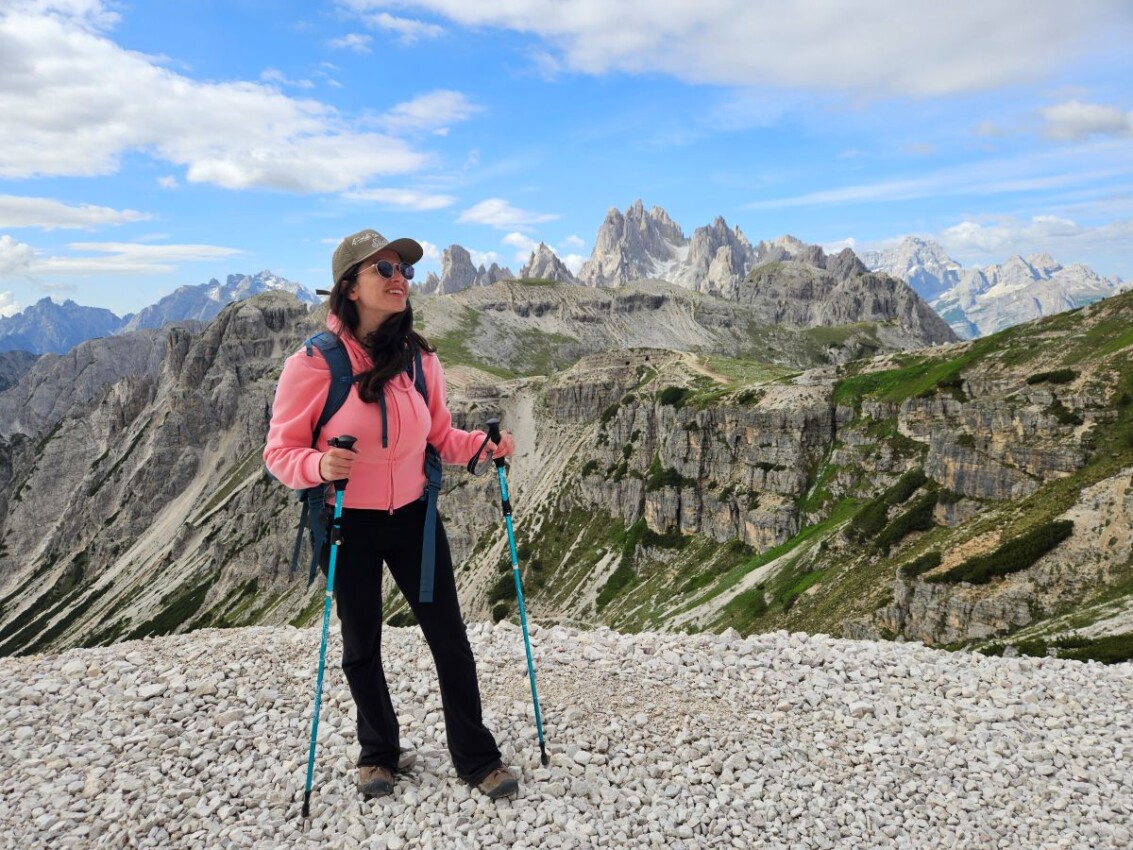
Tre Cime is by far one of the most popular Dolomites activities.
But make no mistake, this is a very challenging hike, and I do not necessarily recommend it for beginner hikers.
Many visitors make the mistake of adding this hike to the top of their itinerary when searching “Best Things to Do in the Dolomites” without researching the trail and realizing it requires some level of training if you have never hiked before.
Not to remove it from your list, but it’s just important to be prepared.
Trekking poles, plenty of food, water, and electrolytes to replenish yourself, and building in time to stop for breaks and hike slowly.
It’s absolutely doable, just please plan accordingly and do not throw it on your itinerary before looking into it!
Lago di Sorapis
The same goes for Lake Sorapis.
This hike was at the top of my Dolomites list, but my friend sprained her ankle at Tre Cime, so we switched our itinerary at the last minute.
It also comes up on all of the “best things to do in the Dolomites” lists, but it is a challenging hike. Experienced hikers will find it no problem.
But if you have not hiked before, please follow the notes I listed for Tre Cime above.
Lago de Braies
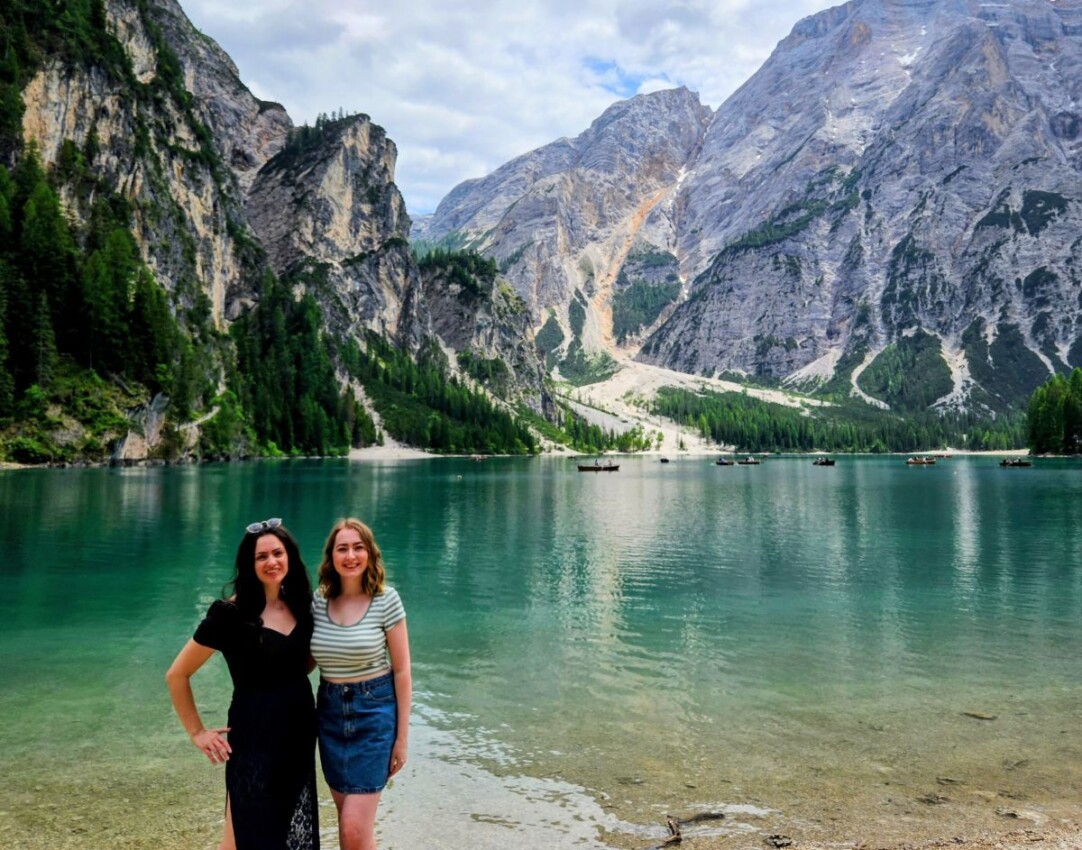
Lago de Braies is BREATHTAKING.
Something out of your wildest mountain fairytale dreams.
The gorgeous, turquoise alpine lake at the base of a towering mountain is somewhere you can relax for hours. And you can!
A pebbly “beach” surrounds the mountain, so it’s easy to bring a towel, book, journal, and lie back for a few relaxing hours.
Other travelers prefer to hike the Lago de Braies – it’s 2.5 miles around the lake.
You can also rent a boat here for that iconic Instagram shot, but it’s €50, and to me, that’s not worth it. To you it might be! Bringing your own boat rentals onto the water is strictly prohibited.
Parking costs €15. No advance parking purchase is required.
Prato Piazza
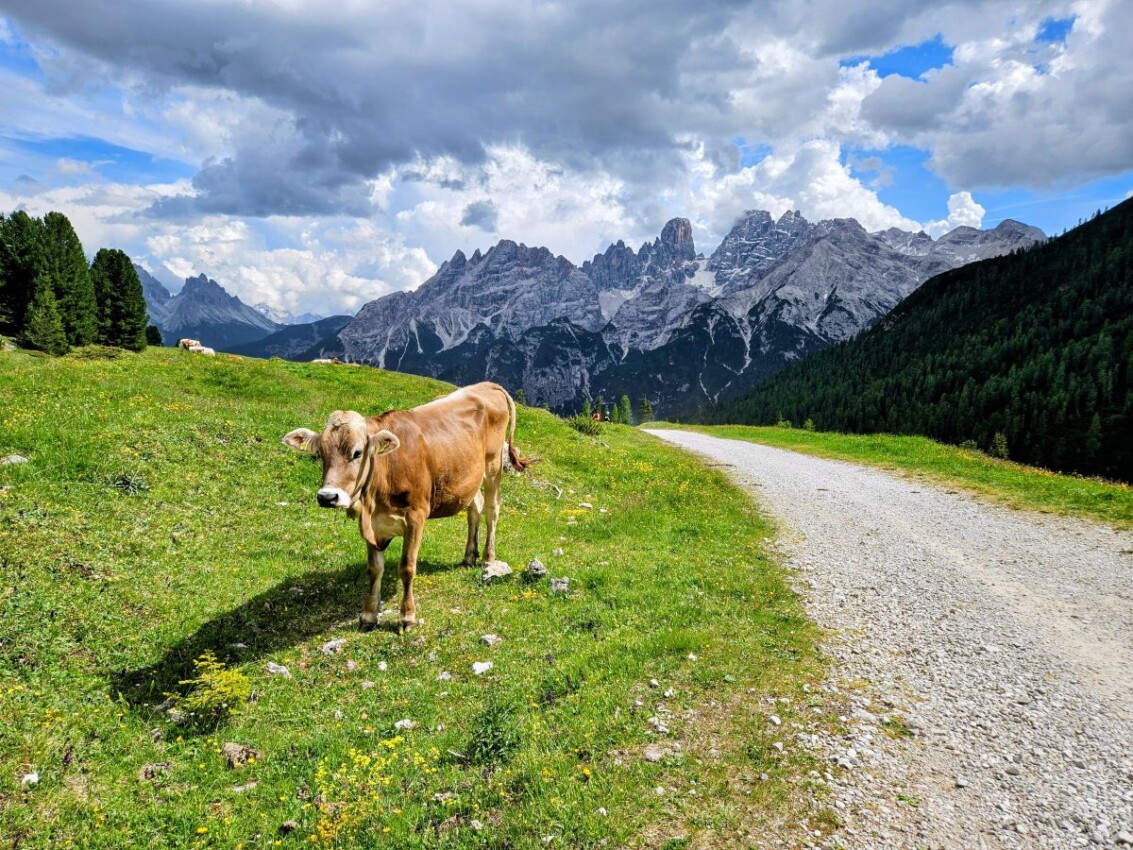
Prato Piazza is a high alpine plateau surrounded by dramatic mountain scenery.
Compared to some of the Dolomites’ more famous attractions, it often feels quieter and less crowded.
The panoramic views are incredible, and there are several easy walking trails, making it accessible for travelers who don’t want to tackle a long hike.
What to Do in the Dolomites- West
Seceda
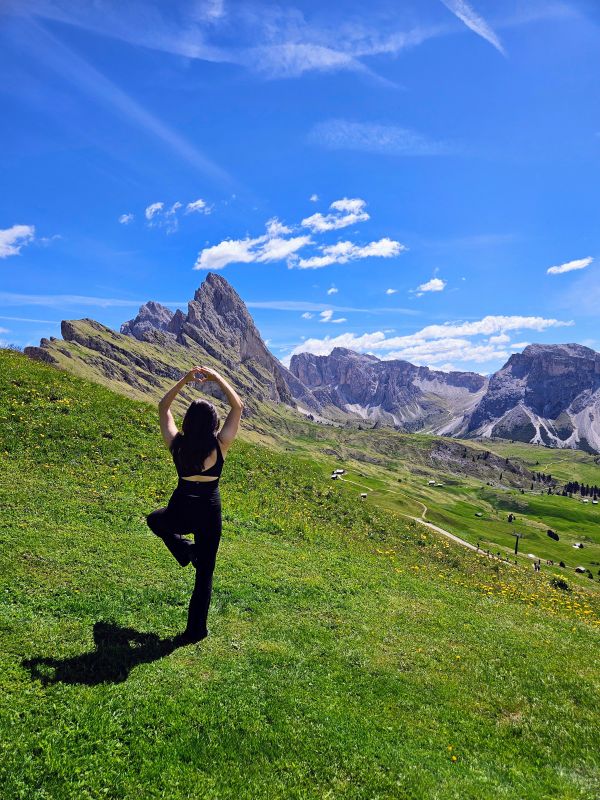
Seceda is arguably the most photographed viewpoint in the Dolomites.
The jagged ridgeline rising above rolling alpine meadows creates one of the most recognizable landscapes in Italy.
Most visitors reach the summit via cable car from Ortisei before exploring the trails and viewpoints that stretch across the mountaintop.
Tip: While the view is amazing, you can get equally incredible views for a fraction of the cost in other parts of the Dolomites.
⭐Popular Dolomites Tours
Alpe di Suisi
Alpe di Siusi is the largest high-altitude alpine meadow in Europe.
Whether you’re hiking, cycling, photographing wildflowers, or simply enjoying the scenery, this area deserves a spot on every Dolomites itinerary.
Val di Funes
Val di Funes is home to some of the most photographed scenery in the Dolomites.
The small church of Santa Maddalena, set against a backdrop of dramatic mountain peaks, has become an icon of the region.
I didn’t make it here during my visit, but maybe next time.
Frequently Asked Questions About Visiting The Dolomites
What is the best month to visit the Dolomites?
September is often considered the best month to visit the Dolomites.
The weather is generally stable, hiking conditions are excellent, summer crowds begin to decrease, and the mountain scenery remains spectacular.
June – August are also very popular but tend to be busier because this is peak season in the Dolomites.
How many days do you need in the Dolomites?
Plan to spend at least 3 to 5 days in the Dolomites to make it worth it.
This provides enough time to visit major attractions such as Seceda, Tre Cime di Lavaredo, Lago di Braies, and several scenic mountain passes.
A week or longer allows for a more relaxed pace and additional hiking opportunities (or longer treks like the Alta Vita 1 or Alta Vita 2).
Do you need a car in the Dolomites?
While it is possible to visit the Dolomites using public transportation, having a rental car provides significantly more flexibility.
A car makes it easier to access remote viewpoints, hiking trails, mountain passes, and smaller villages throughout the region.
Where should first-time visitors stay in the Dolomites?
Ortisei is often the best base for first-time visitors thanks to its central location, excellent amenities, and easy access to major attractions such as Seceda and Alpe di Siusi.
Cortina d’Ampezzo is another popular option, particularly for exploring the eastern Dolomites.
Are the Dolomites expensive?
The Dolomites can be expensive during peak summer and winter seasons, especially in popular towns like Ortisei and Cortina d’Ampezzo.
Travelers can reduce costs by visiting during shoulder seasons, staying in smaller villages, and booking accommodations well in advance. (Mistakes that I made – learn from me!🙂)
What airport should I fly into for the Dolomites?
Bolzano Airport is by far the most convenient airport located directly in the Dolomites.
There are no direct flights from the US, but it offers direct flights from major European cities like London, Berlin, and Prague.
The closest major airports to the Dolomites are Venice, Innsbruck, Verona, and Milan.
Milan and Venice are often the most convenient choices for international visitors from the US.
Can you visit the Dolomites without hiking?
Yes. Many of the Dolomites’ most famous viewpoints can be reached by cable car or short walks.
Visitors can enjoy scenic drives, mountain villages, alpine lakes, and panoramic viewpoints without undertaking strenuous hikes.
Is a Dolomites road trip worth it?
A Dolomites road trip is one of the best ways to experience the region.
Driving allows you to explore scenic mountain passes, visit multiple valleys, and access some of the most breathtaking viewpoints in the Italian Alps.
What are the most beautiful places in the Dolomites?
Some of the most beautiful places in the Dolomites include Tre Cime di Lavaredo, Lago di Braies, Alpe di Siusi, Val di Funes, Lago di Carezza, and Passo Giau.
But please don’t tick these off like boxes- anywhere you visit in the Dolomites will have gorgeous, dramatic scenery!
Are the Dolomites better than the Swiss Alps?
Both destinations offer incredible mountain scenery, but many travelers prefer the Dolomites for their dramatic limestone peaks, scenic drives, extensive hiking opportunities, and generally lower costs compared to many areas of Switzerland.
Mistakes to Avoid in The Dolomites
Doing EVERY activity
Do NOT, and I repeat, do NOT go to the Dolomites with the plan of checking a million boxes of all of the “best things to do” you searched.
The Dolomites are a huge mountain range, and driving through all of it will take you hours. To really enjoy your trip, I recommend prioritizing the top things YOU want to do within the time you have available, and building your perfect itinerary from there.
For example, if someone only has 3 days in the Dolomites, I would recommend they choose either the East or the West side – not both.
Only using Cable Cars
Yes, Cable Cars are a fabulous, accessible way to reach new heights and experience the world (and scenery!) from a brand new vantage point.
However, some cable cars in the Dolomites.
I paid €75 to ride the cable car round-trip to Seceda, and €30 for parking.
Is Seceda incredible? Yes. Did I experience equally incredible views for less than $100? Yes.
Choose wisely. If you are on a budget or you do not want to pay to see every viewpoint, I highly recommend choosing one cable car experience, and
Not Planning for Mountain Weather
Like all mountain ranges, the Dolomites can experience rapidly changing weather throughout the day.
It’s important to pack layers for all seasons. Altitude can also drastically change temperature.
Are the Dolomites Worth it?
Yes, the Dolomites are 10/10 worth it every time.
From the jagged peaks of Seceda and the turquoise waters of Lago di Braies to the breathtaking mountain passes, the Italian Alps are unforgettable.
Whether you’re visiting for a few days or planning a longer adventure, take the time to choose the right base, plan your transportation, and prioritize what interests you most.
No matter when you visit, you’ll quickly discover why so many travelers consider the Dolomites one of the most beautiful mountain destinations in the world.🩵
Now that you have the essentials covered, it’s time to start planning your perfect Dolomites adventure!
⭐Popular Dolomites Tours