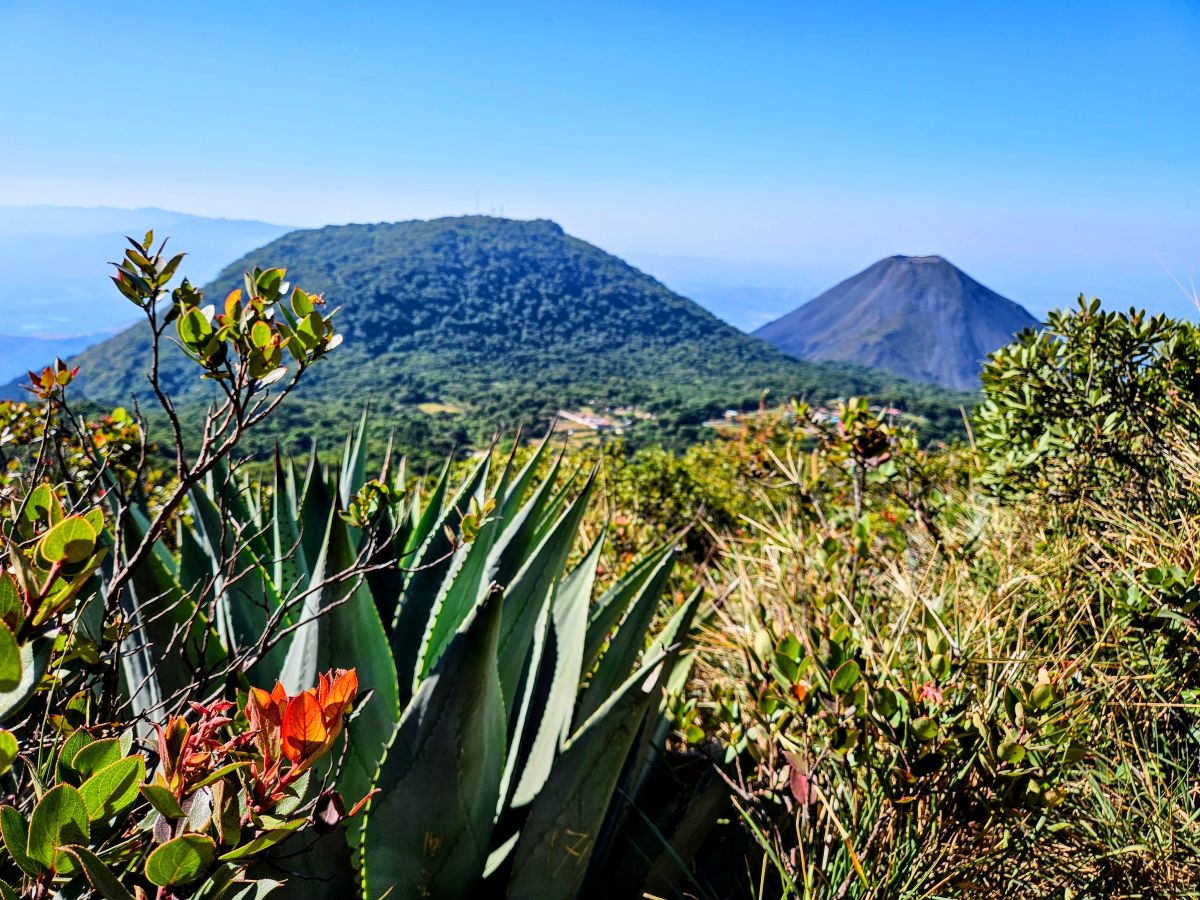
Are you going to complete the Santa Ana Volcano hike in El Salvador? The good news: It’s absolutely AMAZING, and I am going to share all of the details here with you in this complete guide.
I completed the Santa Ana volcano hike in March 2025.
Towering at almost 8,000 feet high, Santa Ana Volcano is El Salvador’s tallest and one you don’t want to miss!
The hike takes you through lush cloud forests and rocky slopes, leading to jaw-dropping views of Lake Coatepeque, rolling valleys, and distant volcanoes.
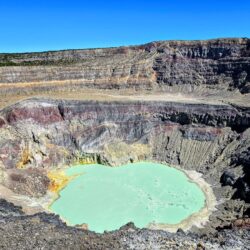
But the real reward? Reaching the summit and staring into the glowing turquoise crater lake, bubbling with volcanic energy.
If you’re up for an adventure with epic scenery, Santa Ana Volcano is easily one of the best hikes in Central America.
This complete Santa Ana Volcano hiking guide includes: how to get to Santa Ana Volcano, what to expect on the hike, what to pack, and frequently asked questions.
Santa Ana Volcano Hiking Guide
How to Get to Santa Ana Volcano
You can hike Santa Ana Volcano in a couple of different ways. However, a guide is required no matter what. Here are your options for how to hike Santa Ana:
1. Day Tour from San Salvador
If you are basing yourself out of San Salvador during your trip, taking a Santa Ana Volcano day tour from San Salvador might be your best option.
Many tours pick up hikers early in the morning from San Salvador to make the drive (less than two hours) to Cerro Verde National Park.
✅Pros:
- You don’t need to switch hotels from San Salvador. This is the best option for people who prefer to keep San Salvador as their base for their El Salvador trip
- Most day tours combine a stop at Coatepeque Lake
🚫Cons:
- TONS of tours will be starting by the time you get to the trailhead. The trail gets extremely crowded around 10:00 am.
- Expensive
2. Private Tour from Santa Ana
Taking a private tour from Santa Ana is how I got to Santa Ana volcano and completed the hike, and it is absolutely my recommendation if you are limited on time and you are a solo traveler in El Salvador.
I had a great experience with the travel group Infini Tours.
I even met some travelers who created private day trips on their own with guides they met along the way.
Creating a private day trip usually costs $100/day, no matter how many people join.
If you have a group of friends, this could be a great way to save money and create a customized itinerary.
✅Pros:
- Starting earlier in the morning (since you are based much closer to the volcano than from San Salvador) allows you to experience the hike without the hordes of crowds.
However, you’ll see them begin the hike on your way back down - Most tours from Santa Ana combine a stop at Coatepeque Lake
🚫Cons:
- Expensive
3. Public Bus from Santa Ana
To take the public bus from Santa Ana to Santa Ana Volcano, hop on Bus 248, which departs from the main bus terminal in Santa Ana. The bus costs about 50 cents – 1 dollar each way.
The bus leaves at 7:30 AM and takes about 1.5 hours to reach the trailhead at Cerro Verde National Park.
Since the guided hike begins around 10:30 AM, this is the only bus option that gets you there on time.
After the hike, you must catch the return bus at 1:00 PM, which is the final bus back to Santa Ana for the day.
✅Pros:
- This is by far the most budget-friendly way to hike Santa Ana Volcano.
🚫Cons:
- Limited bus times
- Extremely crowded because most budget travelers are completing the hike this way, too.
4. Uber from Santa Ana
Taking Uber from Santa Ana to Santa Ana Volcano can be a convenient option, especially for travelers who prefer a faster, more flexible ride.
The drive takes about 1 hour and typically costs $20-$30 USD one way, depending on demand.
However, Uber can be unreliable, especially when trying to get a ride back from the volcano—service is spotty, and drivers are rarely waiting near the trailhead.
To avoid being stranded, it’s smart to arrange a return ride in advance or negotiate with your driver to wait for you.
✅Pros:
- Convenient
- Less time
🚫Cons:
- Extremely unreliable on the return trip
5. Car Rental
Driving to the top of the volcano and joining a tour would be a more budget-friendly alternative to a private tour if you are traveling with pals.
✅Pros:
- Timing flexibility
- Save on costs when splitting the car with a group of friends
🚫Cons:
- Figuring out logistics (such as parking) on your own.
Of course, it’s possible to mix and match some of these choices, like taking an Uber to the top of the volcano and taking the public bus back to the bottom.
Hiking Santa Ana Volcano: What to Expect
The hike up Santa Ana Volcano is divided into three sections.
Section 1
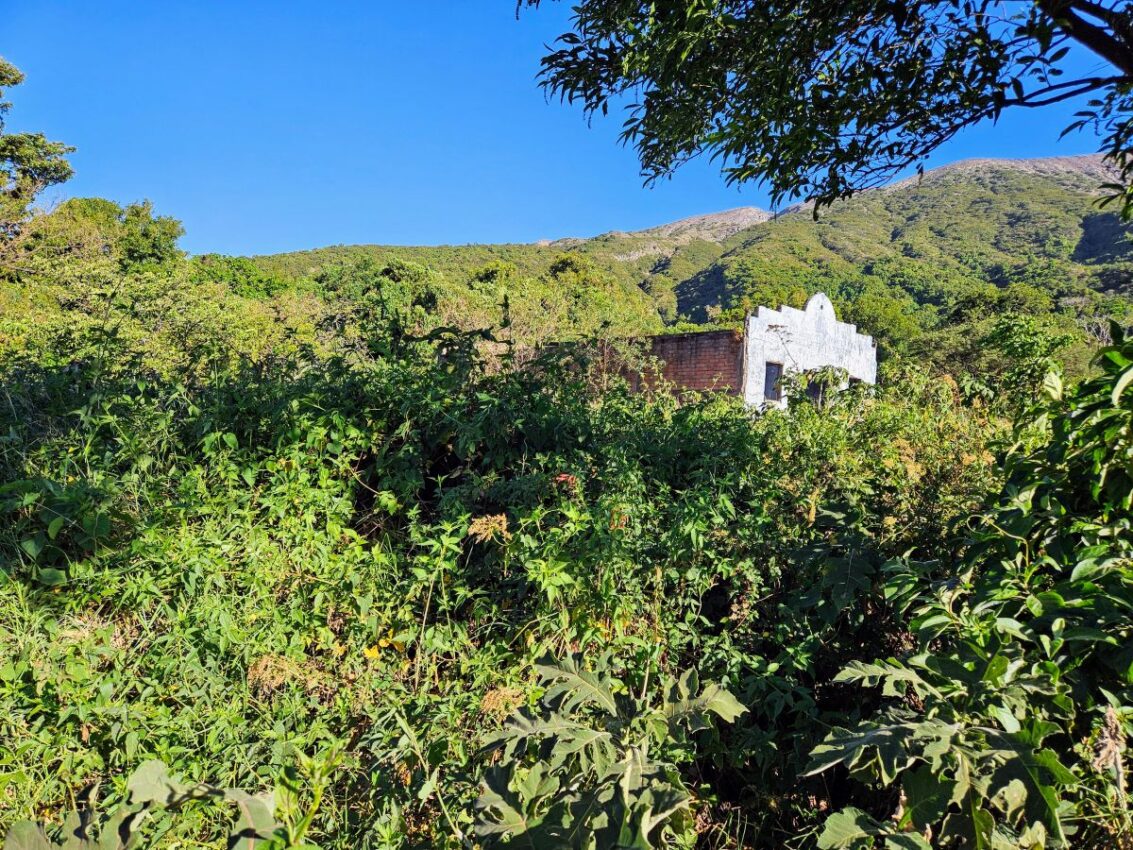
The first section takes you through a shaded forest, where towering trees leave little sun exposure. It’s completely shady. This section includes a lot of stairs and steady elevation gain, so be prepared for a good leg workout right from the start.
Along the way, you might spot colorful motmots, hummingbirds, and parakeets, along with butterflies and even the occasional armadillo rustling in the undergrowth.
Section 2
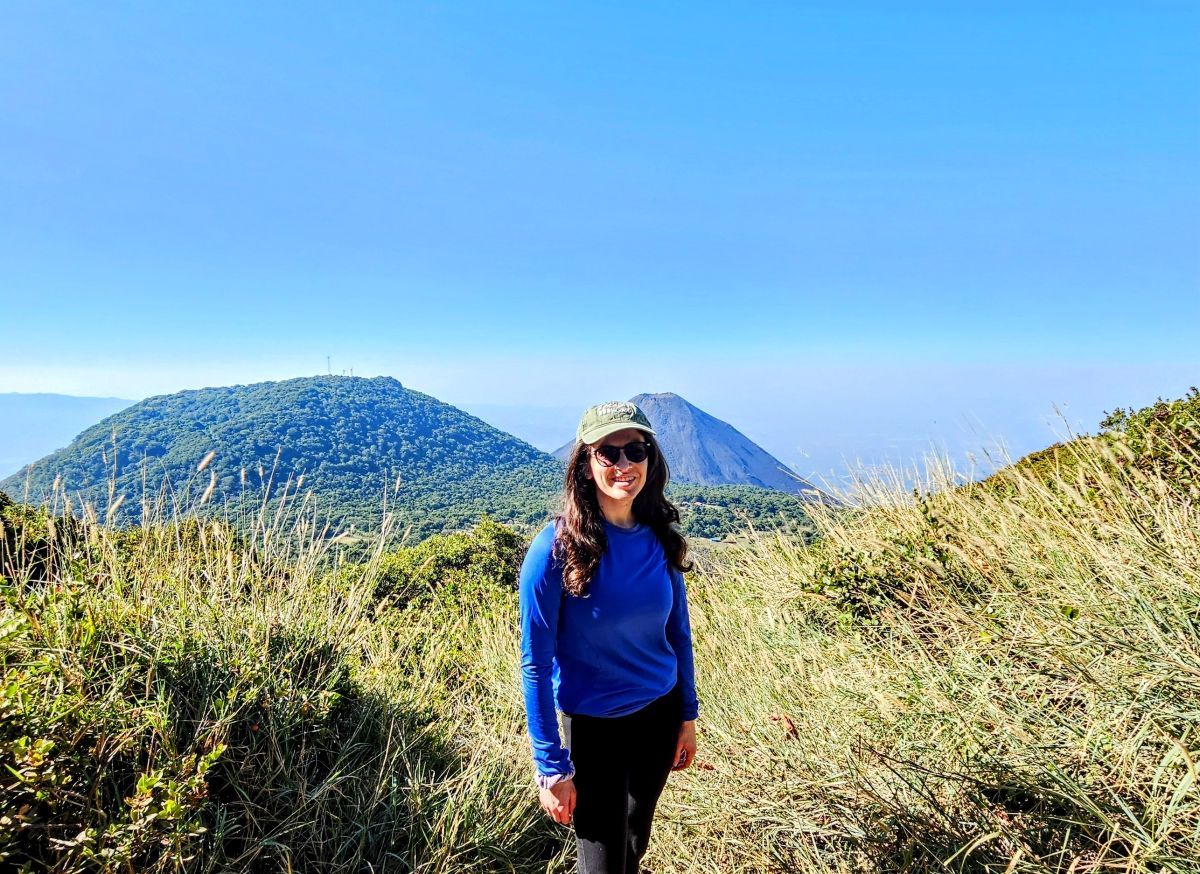
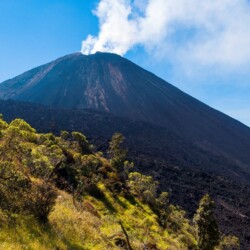
As you leave the dense forest behind, the second section of the hike opens up to rockier terrain with sparse vegetation. This is where the views start to get incredible—suddenly, Izalco Volcano comes into full view, standing tall with its near-perfect cone shape. From here, you can also see Lake Coatepeque shimmering in the distance, along with breathtaking vistas of the surrounding valleys.
Section 3
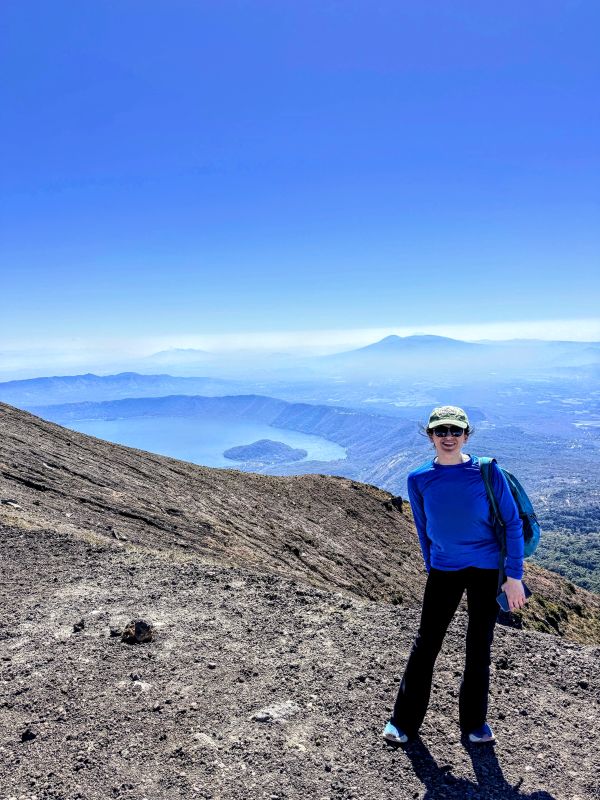
The final stretch is the toughest but most rewarding! The incline becomes steep and rocky, winding through loose volcanic gravel. The wind picks up, and the air gets cooler as you approach the summit.
Once at the top, you’re greeted by the striking turquoise crater lake, steaming with volcanic energy. The colors shift depending on the sunlight, creating an almost surreal scene.
Spend some time taking in the views before making your way back down, where the steep descent can be just as challenging as the climb up.
Expect a 4-5 hour round trip with plenty of elevation gain, changing landscapes, and some of the most incredible sights in El Salvador.
What to Pack for Santa Ana Volcano
- ☀️Sunscreen– LOTS of sunscreen is going to be key. The second half of this hike has no shade, and you are in total sun exposure. Re-applying sunscreen throughout the hike is important.
- 🧢Hat– Keeping a ball hat on hand is always best practice for hikes.
- 🕶️Sunglasses– Even if it’s cloudy, UV rays are strong at higher elevations.
- 🌊Water bottle– Drinking bottled water in El Salvador is recommended. You can purchase one at the start of your hike for $1, or fill a collapsible water bottle with filtered water.
- Liquid IV– I always recommend hydration powder such as Liquid IV for hikes. I have gotten dehydrated way too many times to count, and having a pouch on hand has been a game-changer!
- 🍌Small lunch or snacks– You’ll want energy for the climb. However, you can expect popsicle sellers at the summit!
- 🥾Hiking Boots or Shoes– The terrain is rocky and uneven, so good traction is essential.
- 👕Lightweight, moisture-wicking clothing – The hike starts warm, but temperatures drop as you gain elevation. I also recommend layers, or at least wearing a tank top under your t-shirt or long-sleeve shirt.
- 🌬️Wind Breaker– or a rain jacket! Check the weather before you go. But it’s always super windy at the summit.
Consider shopping at your local REI to pick up your hiking gear before your trip!
Santa Ana Volcano FAQ
1. What is the entrance cost to hike Santa Ana Volcano?
The entrance fee for Santa Ana Volcano is typically $6 USD per person for foreigners and $3 USD for Salvadorans.
If you’re parking, expect to pay an additional $2-$3 USD. If you didn’t book a tour, hiring a guide at the start costs around $3 USD per person. Guided hikes are required.
2. What is the best time of day to visit Santa Ana Volcano?
Santa Ana Volcano can only be visited in the morning. The guided hikes begin at 10:30 AM, and all visitors must hike within this timeframe because the park closes in the early afternoon for safety reasons.
Park rangers and guards patrol the trails to ensure everyone is accounted for and to prevent anyone from being left on the volcano after it closes. If you arrive too late, you won’t be allowed to start the hike.
3. Is the volcano ever closed?
Yes, it’s not uncommon for Santa Ana Volcano to be temporarily closed due to weather.
One of the most frequent reasons for partial closures is strong winds, which can make it unsafe to reach the summit. In these cases, the trail may be blocked at a viewpoint approximately 25 minutes before the summit, meaning hikers will not be able to see the famous turquoise crater lake.
It’s always best to check the weather conditions before beginning the hike. I also recommend leaving yourself a few days of schedule flexibility in your El Salvador itinerary to account for closures or just super cloudy skies/unclear views. I am so grateful to have visited on a fully clear day.
4. What is the best season to hike Santa Ana Volcano?
The best time to hike is during the dry season, from November to April. The skies are clearer, and the trails are less muddy, making for a safer and more enjoyable hike.
The rainy season (May to October) can make the trails slippery, and visibility at the crater may be limited due to fog.
However, the weather can be unpredictable either way, so this might not be something to fully base your trip around!
I visited in March and had amazing weather and clear conditions. However, the trail was closed at the halfway point just days later due to strong winds.
5. How difficult is the hike?
The hike is considered moderate on Alltrails and takes about 4 to 5 hours round-trip. It includes a mix of steep and rocky sections, but most people in decent shape can complete it.
It took me about 4 hours to complete the hike, which included stops for water throughout the hike and time enjoying the summit at the top!
6. Is Santa Ana an active volcano?
Yes, Santa Ana is an active volcano. Its last major eruption was in 2005, when it spewed ash and forced evacuations in the surrounding areas.
Its infamous, vibrant, turquoise crater lake at the summit is actually formed due to volcanic activity!
Rest assured, Santa Ana Volcano is closely monitored, and hiking is considered safe under normal conditions.
7. Can you hike Santa Ana Volcano without a guide?
No, a guide is required to hike Santa Ana Volcano. The hike is always done in groups, accompanied by local guides.
8. Are there restrooms or food options at the trailhead?
Yes, there is a basic restroom with about 5 stalls near the entrance.
There are also small food stalls at the start of the hike, where you can buy snacks like fresh fruit or granola bars, or bottled drinks like water. These stands also sell gift shop items like t-shirts and hats.
There are also vendors selling popsicles at the summit!
Conclusion
Hiking Santa Ana Volcano is an unforgettable adventure, offering stunning views, a unique crater lake, and a rewarding challenge.
With its morning-only access, required guides, and seasonal weather changes, planning is key.
Whether you’re chasing epic landscapes or simply looking for a great hike in El Salvador, Santa Ana Volcano delivers.
Lace up your boots, bring your camera, and get ready for one of Central America’s most incredible natural experiences!